Airline Executive Aircraft Tier List
S to C rankings for starter jets, regionals, and long-haul widebodies in Roblox Airline Executive.
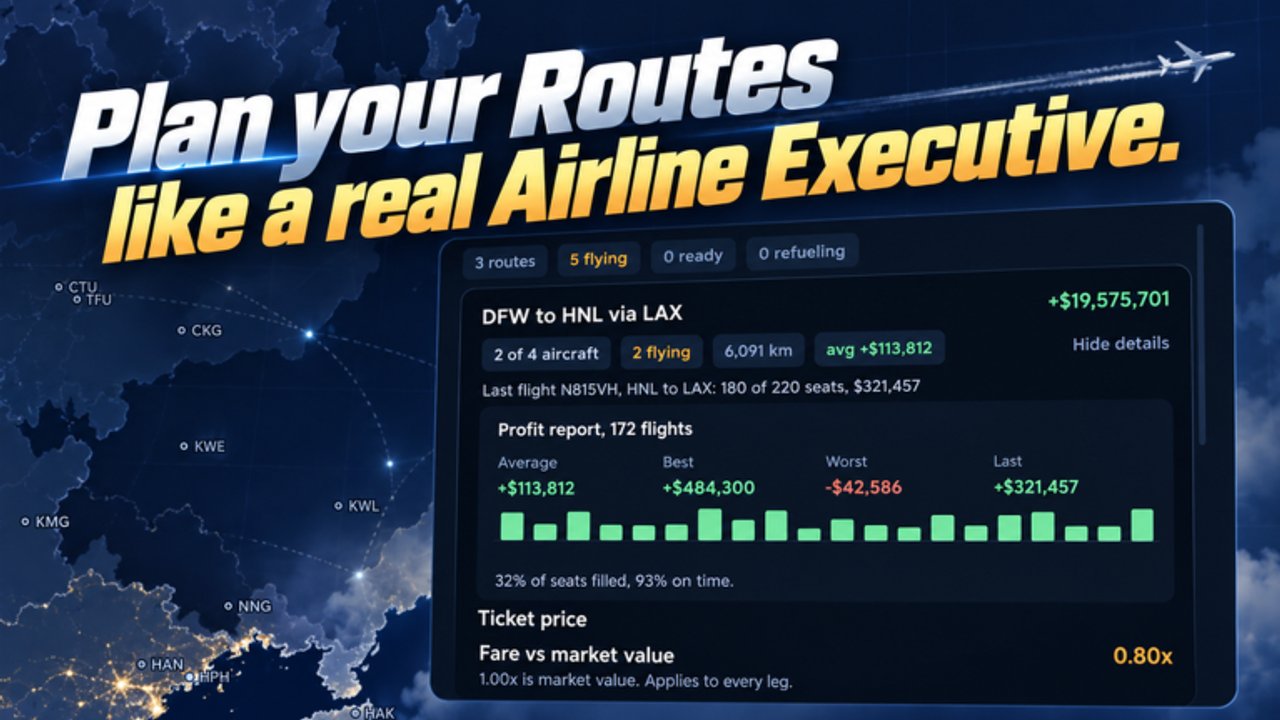
This Aircraft Tier List Hub ranks Airline Executive jets by role, not by raw sticker price. For opening-hour buy order, use the companion early-game fleet guide. A used Boeing 737-200 that keeps your first routes alive can outrank a prestige widebody you cannot fill. Beta balance will shift, so treat tiers as decision frameworks tied to range, capacity, maintenance burden, and cash timing.
Criteria used here: early cash efficiency, fuel sensitivity, maintenance risk (regulators ground neglected airframes), route flexibility on the 1,100+ airport globe, and how well the type pairs with staff and research progress. Cross-check purchases with fleet maintenance, route planning, and ticket pricing.
S tier — best-in-role workhorses
Used narrowbodies that print while you learn (starter 737-200 class). You begin with one used jet — often a Boeing 737-200 around 65% condition — plus $1,000,000 and a single airport. In the first sessions that airframe is S tier for cashflow if you keep it maintained. It teaches block times at 60X sim speed, shows how fuel spikes eat margins, and funds your second airport without forcing a bankruptcy spiral.
Right-sized regionals on thin spokes (Embraer-class). When you open secondary cities, regional jets shine. They fill seats faster than oversized metal, tolerate lower fares, and keep utilization high while you experiment with mouse-drawn multi-stop paths. S tier on thin domestic or short international hops where a widebody would fly half empty.
S-tier rule: buy what your current demand can fill daily, not what looks cool on the apron.
A tier — strong once cash and hubs exist
Modern narrowbodies for dense corridors. After Atlanta HQ traffic stabilizes and you add value airports (Kansas City under roughly $1.5M is a classic early expansion example), upgraded narrowbodies become A tier. They carry more passengers per wave, support competitive fares on busy city pairs, and scale when research and pilot quality improve. Pair them with solid staff hiring so delays and morale hits do not erase the uplift.
Select long thin routes with careful scheduling. A single well-timed longer hop can be A tier if fuel is calm and you price tickets using live costs. It drops to C if you ignore minute-by-minute fuel or leave the jet at low condition.
B tier — situational tools
Older jets bought purely because they are cheap. Bargain airframes help when capital is tight, but they demand stricter maintenance budgets. Treat them as B tier bridges: useful to open a spoke, dangerous if you stack five neglected hulls and invite mass groundings.
Mixed fleets without shared parts discipline. Variety looks powerful on the leaderboard, yet spreading across too many types before you understand maintenance cycles is only B tier. Standardization often beats novelty in beta.
Prestige liveries and vanity configs. Fun, but B at best for competitive net worth climbs unless they somehow improve utilization.
C tier — traps for new CEOs
Widebodies too early (Airbus A330 / A350 class before demand). Long-haul twins are aspirational and eventually essential for global networks touching Heathrow, Rome, and other major hubs. Bought on day one with thin demand, they become cash incinerators: high fuel exposure, longer turnarounds, heavier maintenance, and empty seats that force panic discounting. Park them in C tier until your airport count, research, and feeder routes can fill them.
Any jet you cannot afford to maintain. Condition rot turns S-tier metal into C-tier liabilities when regulators ground the fleet mid-strike or mid-fuel-spike. If the repair bill threatens bankruptcy, do not buy the plane.
Speculative auction impulse buys. If a purchase only makes sense because a rival on your eight-player server flexed, it is C tier ego spending.
Role matrix (quick reference)
| Role | Prefer | Avoid early |
|---|---|---|
| First cash | Maintained used 737-class | Brand-new widebody |
| Thin spoke | Embraer-class regional | Oversized narrowbody |
| Dense domestic | Upgraded narrowbody | Neglected bargain hulls |
| Long-haul hub | A330/A350 when feeders exist | Long-haul with no spokes |
| Crisis fuel spike | Efficient smaller jets | Thirsty prestige metal |
How tiers interact with ops
Aircraft rank is meaningless without systems play:
- Routes: Mouse-draw paths that match range and demand. See route planning.
- Airports: Atlanta-style HQ strength plus affordable secondaries. See buy airports.
- Fares: Adjust when fuel moves; do not set-and-forget. See ticket pricing.
- People: Expert pilots and morale keep schedules reliable. See hire pilots.
- Codes & tools: Free rewards from codes and checklists in tools fund smarter fleet steps.
Climbing the meta without overbuying
Top 100 competition scores net worth, fleet, routes, and airports. A bloated C-tier fleet of grounded jets hurts every pillar. A lean S/A mix with high utilization often beats a glamorous hangar. Revisit this hub after patches listed on updates, and ground your buying plan in the beginner guide if you are still unlocking the UI.
Image reference
Use the fleet screenshot mindset: identify type, estimate mission (regional vs long-haul), then ask whether today’s demand and maintenance budget support it. The globe rewards patience more than impulse widebodies.
Frequently Asked Questions
Quick answers to the most common Airline Executive questions.
What is the best starter aircraft in Airline Executive?
Your used starter jet (often a Boeing 737-200 around 65% condition) is best-in-role early if you maintain it and fly fillable short routes.
When should I buy an Airbus A330 or A350?
Wait until feeder routes, airport count, and demand can fill widebody seats; buying them too early is a common C-tier mistake.
Are Embraer regionals good?
Yes for thin spokes — they fill faster than oversized jets and help expand without crushing utilization.
Does the tier list change after updates?
Beta patches can shift economics. Recheck Updates and rethink purchases when fuel, maintenance, or demand rules change.
Should I buy many cheap damaged jets?
Only as short bridges. Neglected fleets get grounded by regulators and can trigger bankruptcy during strikes or fuel spikes.